
Leading Professional Innovation
- etamaro
- English
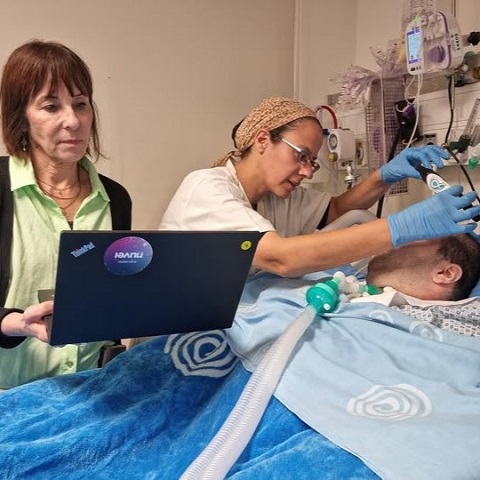
Reuth TLV is proud to introduce the Eyecon System – a groundbreaking tool designed to enhance communication with patients in states of reduced consciousness.
How does it work?
It is an advanced system that analyzes facial muscle movements and electrical signals generated by the brain to provide medical teams with information on the patient’s level of awareness. The tool, designed for patients in states of reduced consciousness whether or not they require ventilation, is now also used to assist soldiers who have sustained severe head injuries in the current war.
The system was developed in collaboration with Prof. Avia Gvion, Director of the Communication Disorders Unit at Reuth TLV, Tamar Misha, an occupational therapist at the hospital, and Dr. Goded Shahaf, Principal Investigator at the Applied Neurophysiology Research Lab at the Rambam Health Care Campus.
Prof. Gvion discusses the equipment and its potential: “This innovative tool allows us to gradually establish communication with patients in states of reduced consciousness in ways that were previously impossible. It builds on existing treatment protocols, which teach patients to communicate using skills available to them, such as blinking to indicate ‘yes’ or ‘no.’ The system recognizes each individual’s specific communication methods, enabling them to express their needs. It is particularly heartwarming to see families suddenly be able to communicate with their loved ones.
It is important to emphasize that we are talking about minimal communication since these are patients with significant brain damage. However, it enables them to connect with the outside world and brings hope for them and their families. I am so happy that we could contribute to the development of the system and serve as a clinical trial site.”
Tamar Misha adds, “The Eyecon creates so many opportunities for us. The system allows us to determine the patient’s level of awareness at any given moment, whether they are ready to work with us, and which stimuli they best respond to. The technology allows us to gradually progress with the patients, first learning to blink voluntarily, then selecting pre-recorded messages, and potentially even writing by choosing letters on a digital board.
When I meet a patient in a state of reduced consciousness, I assume that there is so much more to them than what I can see. If the person they used to be is inside, I want them to know that I am here for them and will not give up.”
May interest you
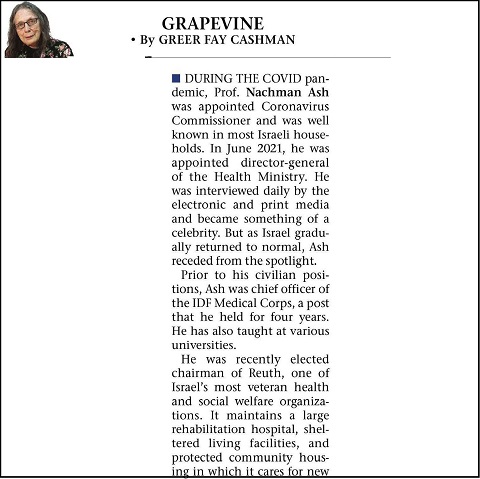
02/05/2025, the jerusalem post: “Prof. Nachman Ash was elected chairman of Reuth”
- etamaro
- English
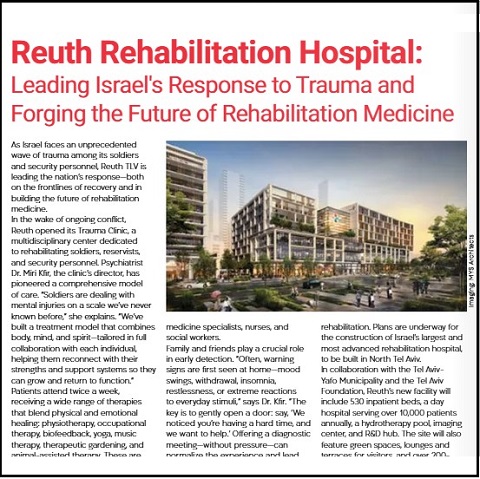
August 2025, Atmosphere Magazine: "Reuth Rehabilitation Hospital – Leading Israel’s Response to Trauma and Forgoing the Future Rehabilitation Medicine”
- etamaro
- English
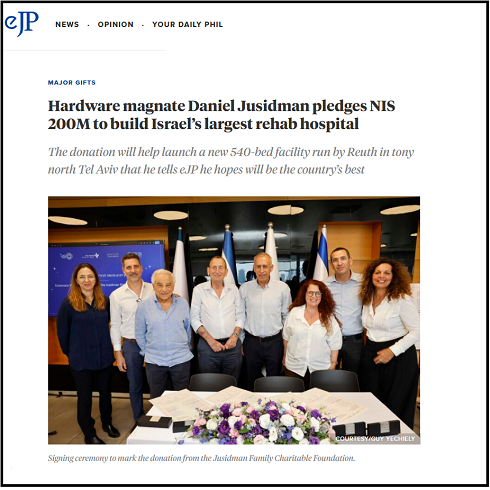
15/06/2026, eJP: “Hardware magnate Daniel Jusidman pledges NIS 200M to build Israel’s largest rehab hospital”
- etamaro
- English