
“Don’t Keep It Inside – Ask for Help, It Can Save Lives”
- Dikla Tuchman
- News
A soldier’s journey with PTSD at Reuth’s Trauma Center highlights urgent need for awareness and treatment
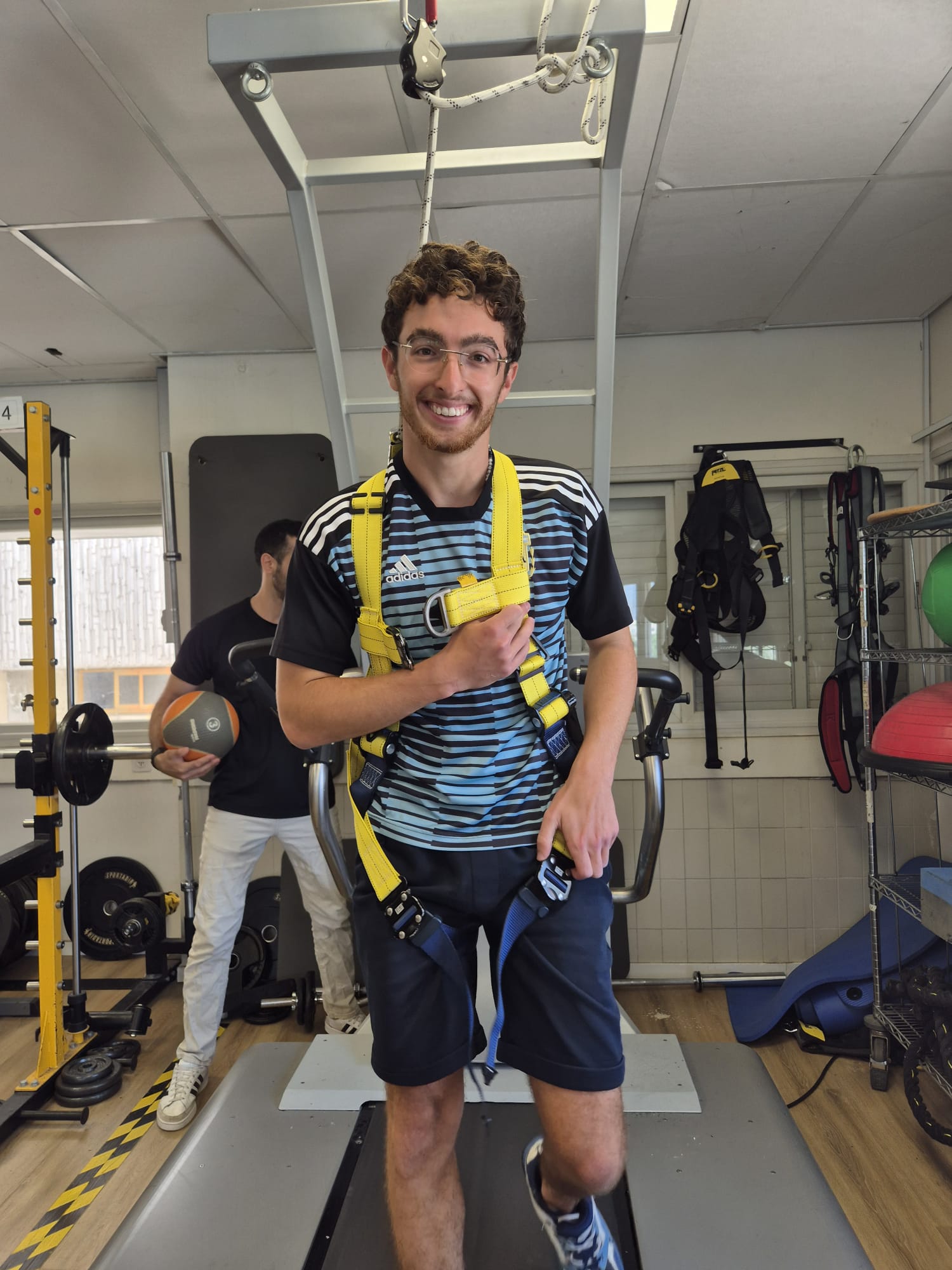
When Aviv Pinchas, 20, was injured in an operational accident while serving as an artillery soldier, he thought physical rehabilitation would be the hardest part. But as the months passed, he began experiencing flashbacks, nightmares, loss of appetite, and withdrawal from his family. “I felt like I wasn’t myself, that I didn’t know myself,” he recalls. Eventually, Aviv realized he was suffering from post-traumatic stress disorder (PTSD) and sought mental health treatment.
Against the backdrop of a troubling wave of suicides in the IDF, Aviv has a clear message for fellow fighters. “Don’t keep it inside. Ask for help, it can save lives,” he stresses. “If only they talked about it more, they could have been saved. The public and the fighters need to know that it’s possible to get out of this.”
From battlefield to rehabilitation
Aviv enlisted just two months after the outbreak of the war. Like many young soldiers, he felt compelled to serve. “At first, I didn’t want to be a fighter, but October 7 reinforced in me the feeling that I wanted to be part of it,” says Aviv. “My grandfathers fought in the Golan Heights and the Paratroopers, my father in Givati, and I realized that now it’s my turn.”
Early in his service, an operational accident left Aviv with acute acoustic trauma and bleeding in his ears. After hospital treatment, he struggled in silence for months before breaking down in front of his mother. “It was one of the first moments when I realized that something big had happened and was affecting me,” he recalls.
He was officially diagnosed with PTSD and in January began treatment at Reuth Rehabilitation Hospital’s Trauma Center in Tel Aviv, a center established in response to the surge in physical and psychological injuries since October 7.
Healing body, mind, and spirit
Reuth’s unique therapeutic model provides multidisciplinary care that addresses both physical and psychological trauma. Soldiers attend the center twice a week for a personalized program that may include physiotherapy, occupational therapy, biofeedback, yoga, music therapy, therapeutic gardening, acupuncture, as well as psychological and psychiatric support.
“As the treatment progressed, I felt like I was returning to who I was, and my hearing also improved,” Aviv shares. “The acupuncture worked wonders for me. My ears were blocked and painful to the point where I couldn’t even put my AirPods on the lowest volume.”
One of the most powerful aspects for Aviv has been the sense of belonging he has felt at the Center. “We sometimes come here after difficult nights of fear and demons floating around,” he says. “And you come here and know that there is someone who cares about you.”
An urgent national challenge
According to the Freedom of Information Movement, since the outbreak of the war more than 10,000 soldiers have been treated for psychological reactions and PTSD, and nearly 4,000 have been officially recognized as PTSD patients by the Ministry of Defense. Since the beginning of this year alone, 17 soldiers have died by suicide.
“The scope is much larger than is reported,” says Dr. Miri Kfir, senior psychiatrist and Director of the Trauma Center at Reuth. “Some soldiers only now, many months later, are realizing what they are experiencing and that they need help. The more we increase awareness, legitimacy and normalization, the more the stigma will be reduced – and the suicide rate will decrease.”
Dr. Orit Stein Reisner, Director of Reuth, adds, “Our mission is to rehabilitate not only the body but also the mind and spirit. Out of this commitment, we established the Trauma Center for the benefit of war victims. It is a source of immense pride to witness the rehabilitation journey of soldiers, their return to function and their reintegration into the circles of life.”
“It is possible to get out of this”
Although Aviv acknowledges that PTSD will remain part of his life, he is determined to spread a message of hope. “The public and the fighters themselves need to know that it is possible to get out of this,” emphasizes Aviv. “It is not a dead end. I am still in it, it will accompany me for the rest of my life, but it is possible to feel better.”
May interest you

News in the Field of Rehabilitation: A Plan to Establish the Largest Rehabilitation Facility in Israel is Underway
- etamaro
- English

Vitamin D - Importance and Sources
- etamaro
- English

Bank Leumi Rehabilitation Hub
- Anat.peled@reuth.org.il
- News